Gondwana; Antarctica and Australia in particular.
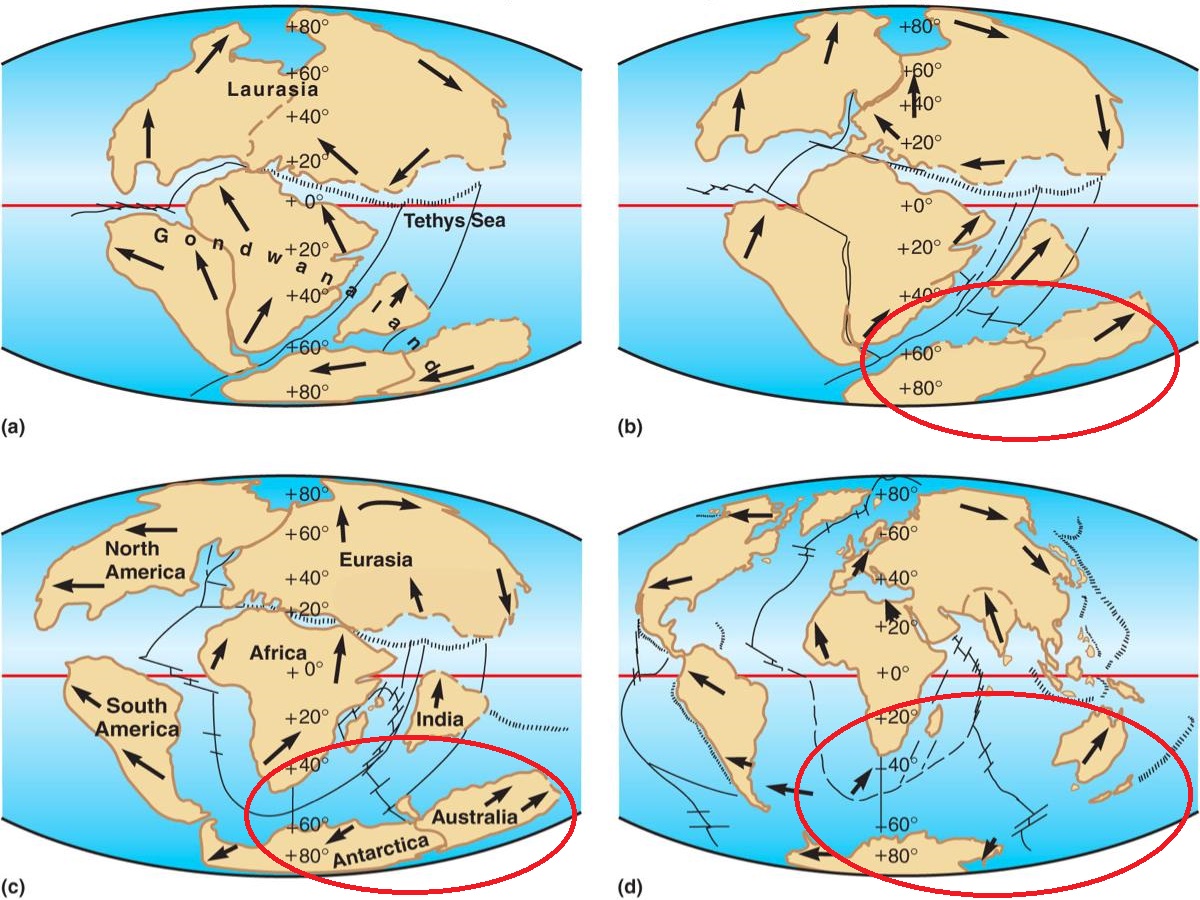
These are the current textbook and Internet depictions of the Pangaea, Gondwana connection – and of their “dis-connection” as the various tectonic plates drifted apart:
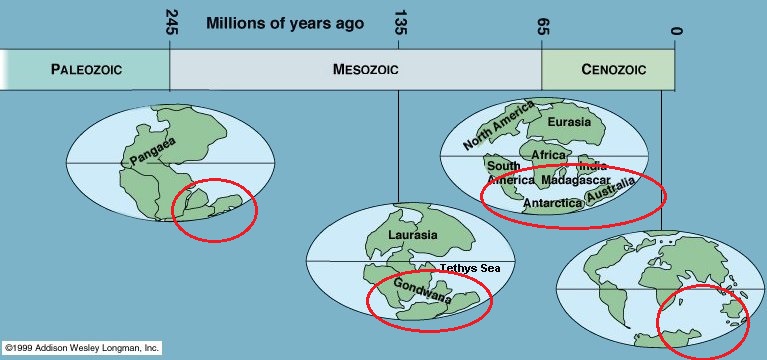
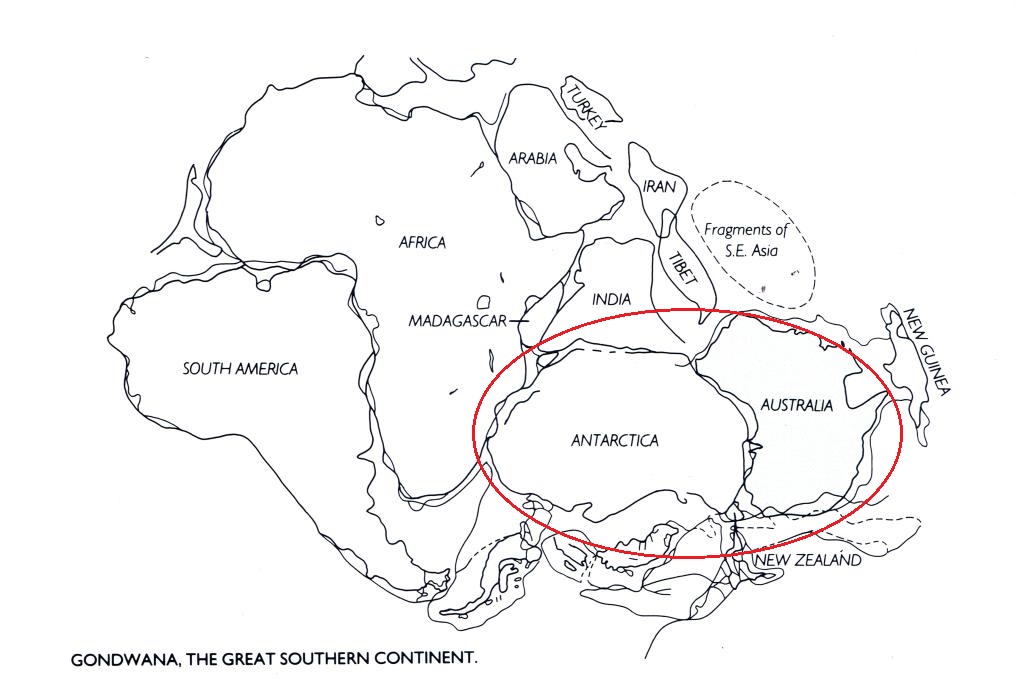
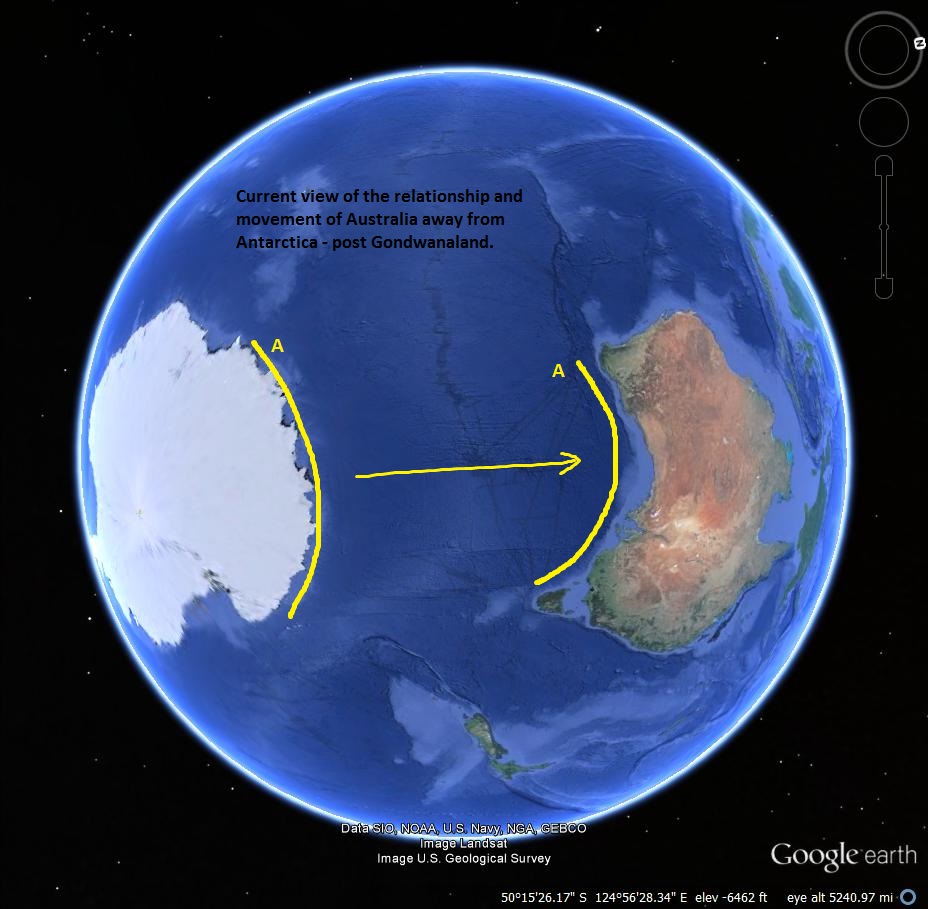
These illustrations above show Australia to be originally attached to the “Eastern” shores of Antarctica. And, as the Tectonic Plates separate, Australia “drifts” in a relatively straight-line direction towards the East – after the destruction of Gondwana (around 250-200 million years ago). Much like This:
The descriptions of the events that caused such large land masses to split apart, are usually followed by images of huge volcanic rifts in the plates – and sub-surface forces that involve subduction – as in the movement of large under-ground currents of magma.
The Hoy-Ensz Theory proposes a different view and chain of events. It begins with a new position for Australia during its Gondwana years, and includes an impact at the tip of South America.
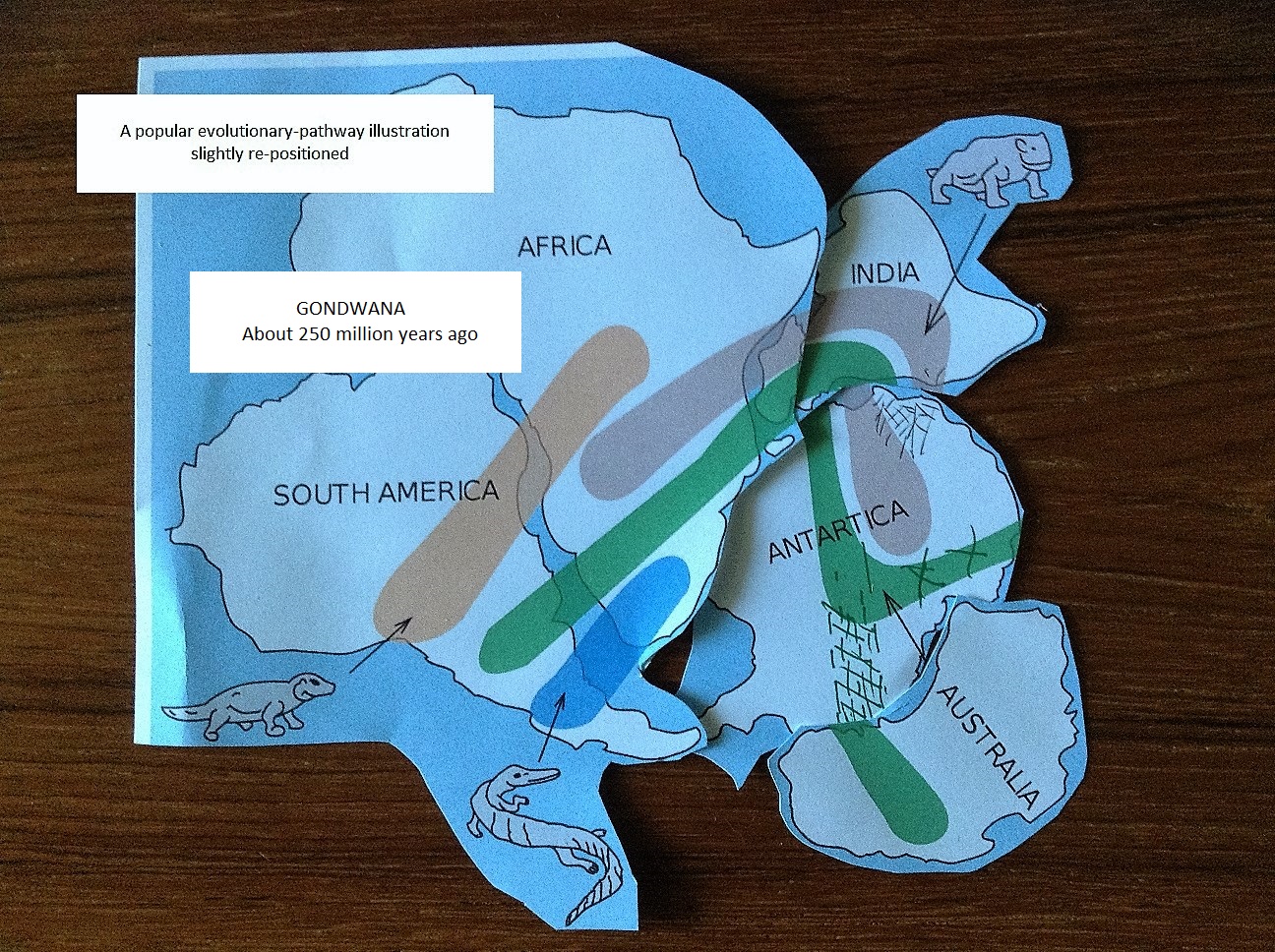
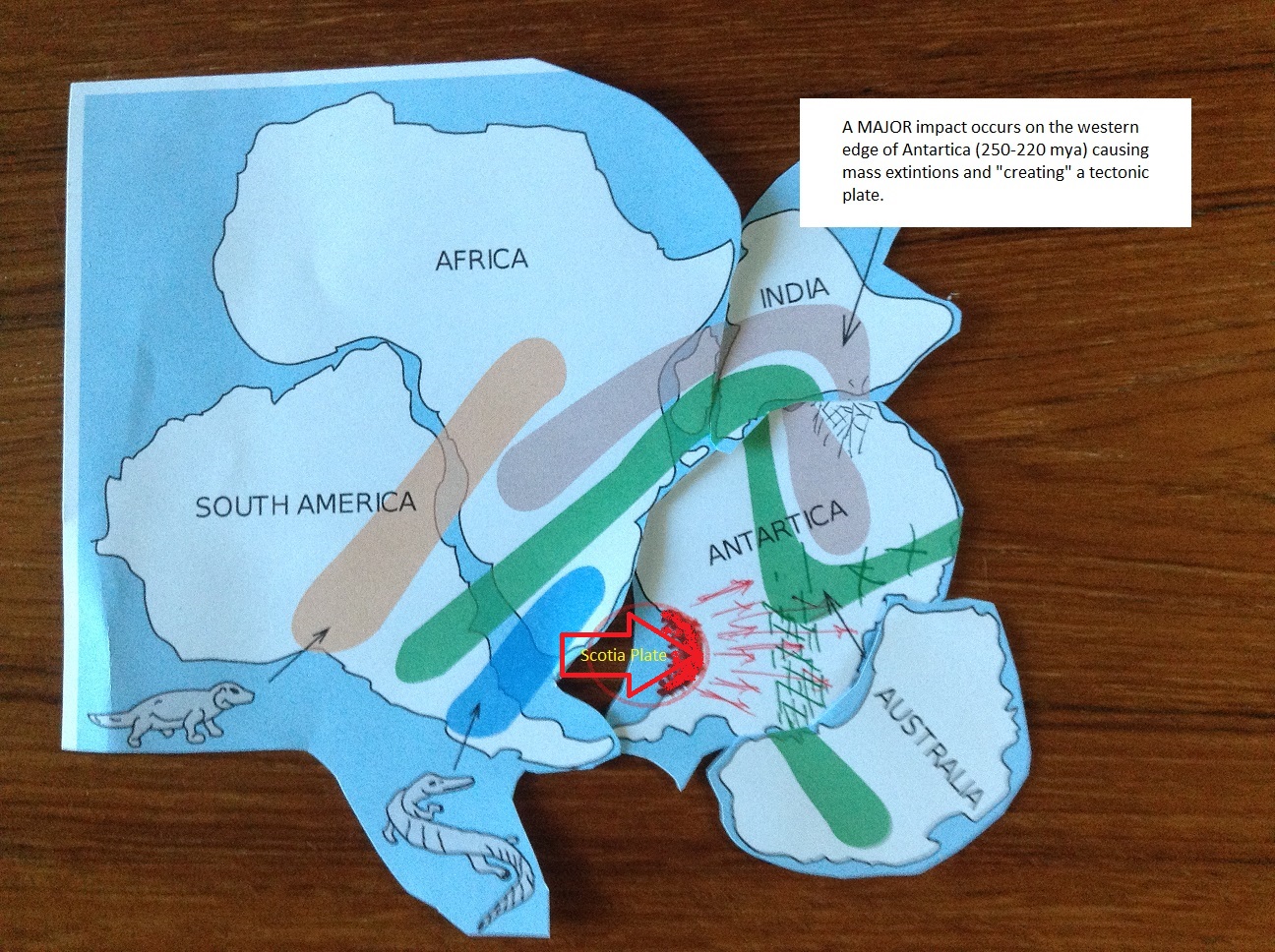
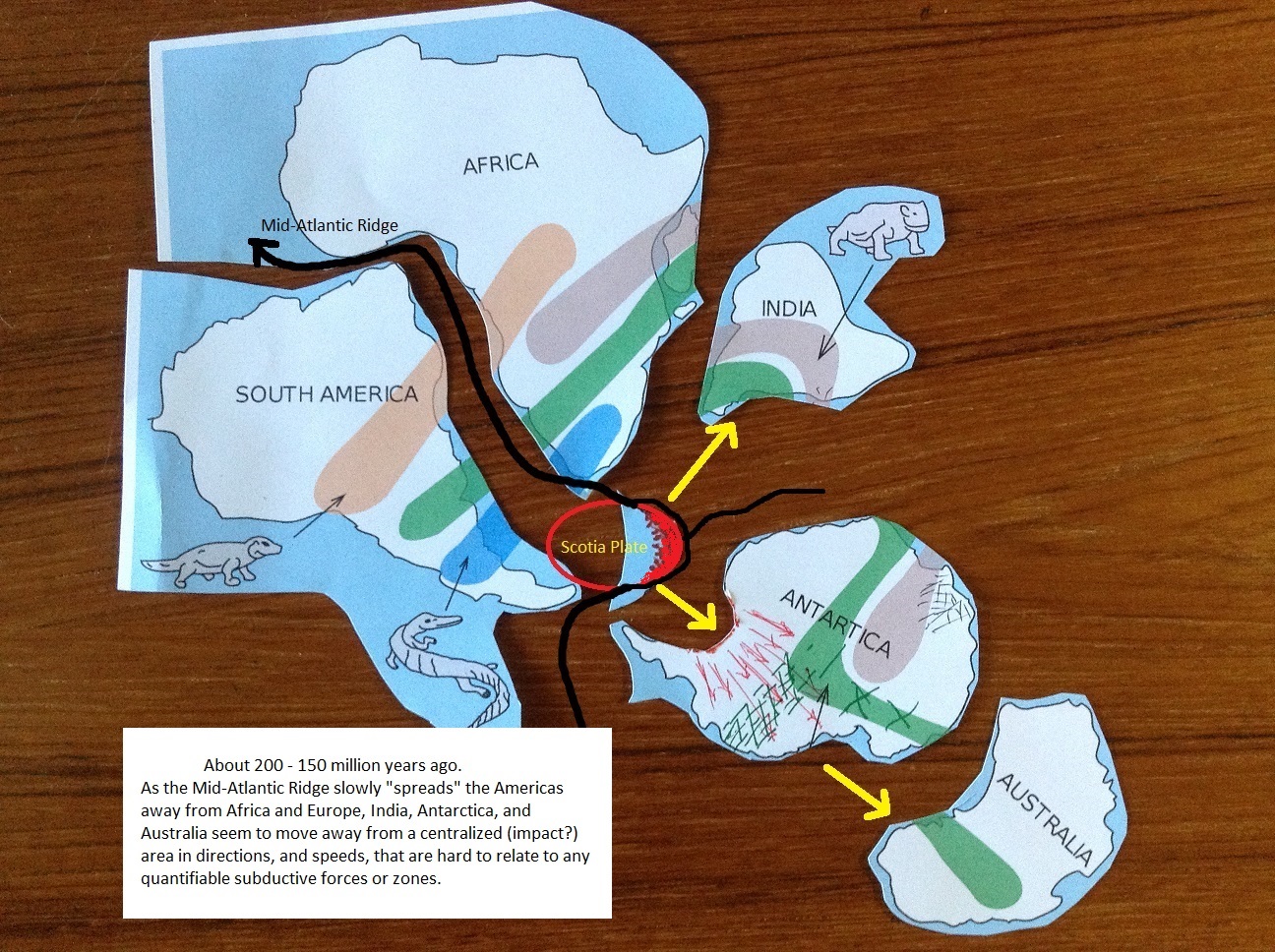
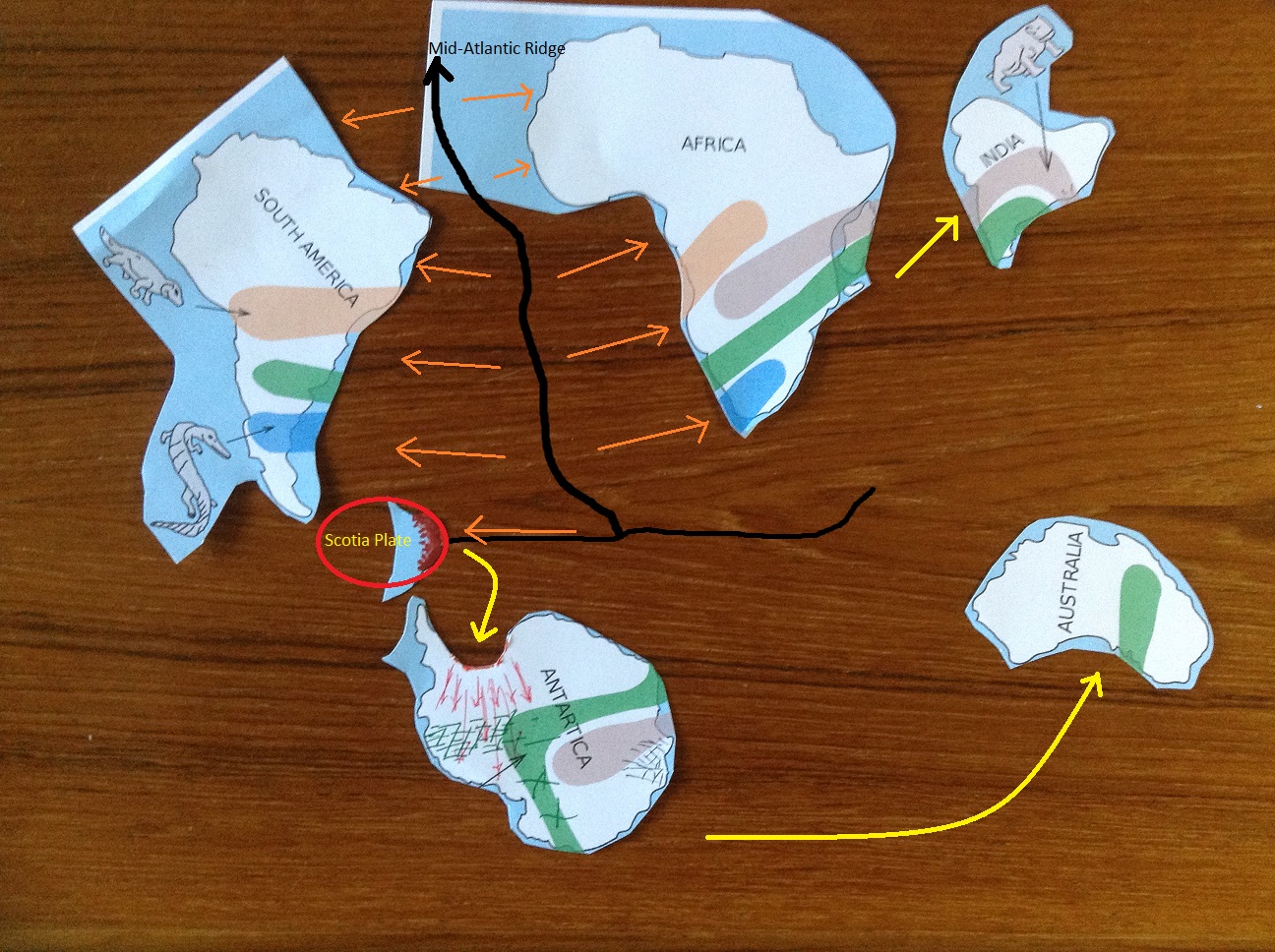
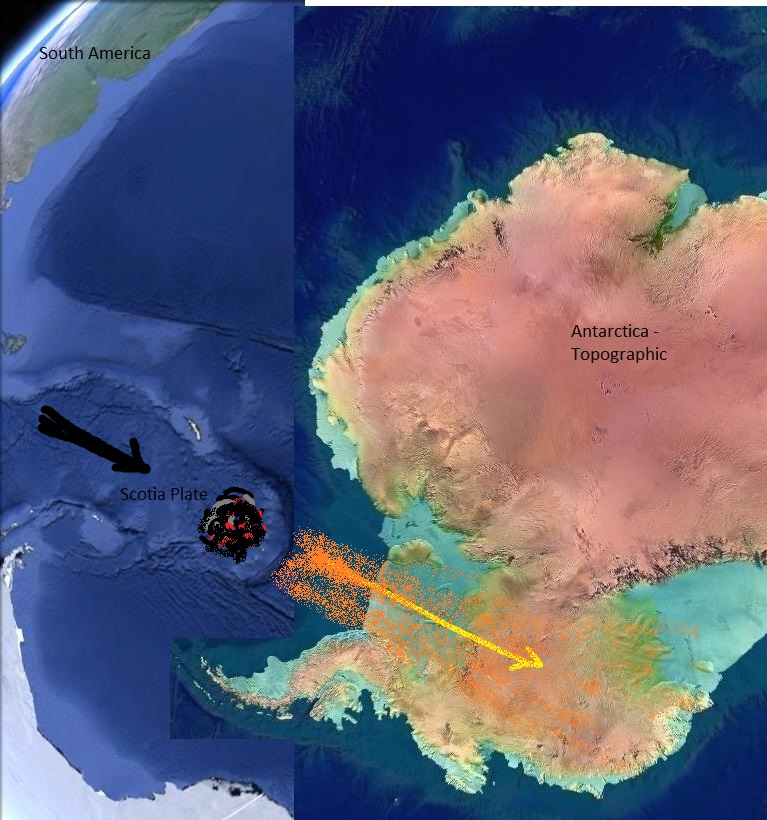
The impact creates a Crater (Scotia Plate) and spreads debris to the east – instantly eroding a large part of the Trans-arctic Mountains of Antarctica, and shooting searing heat, dust and devastation towards what is now the Victorian Desert of Southern Australia. The crevasse created by the impact is almost circular, and it actually “creates” and delineates the continent of Antarctica. As the fissure continues to “open”, it shears-off Australia and heads northwest. Antarctica is “spun” clockwise to the south, Australia moves counter-clockwise and to the east, and India now has a reason to head north. (See: Pangaea Shattered for detail).
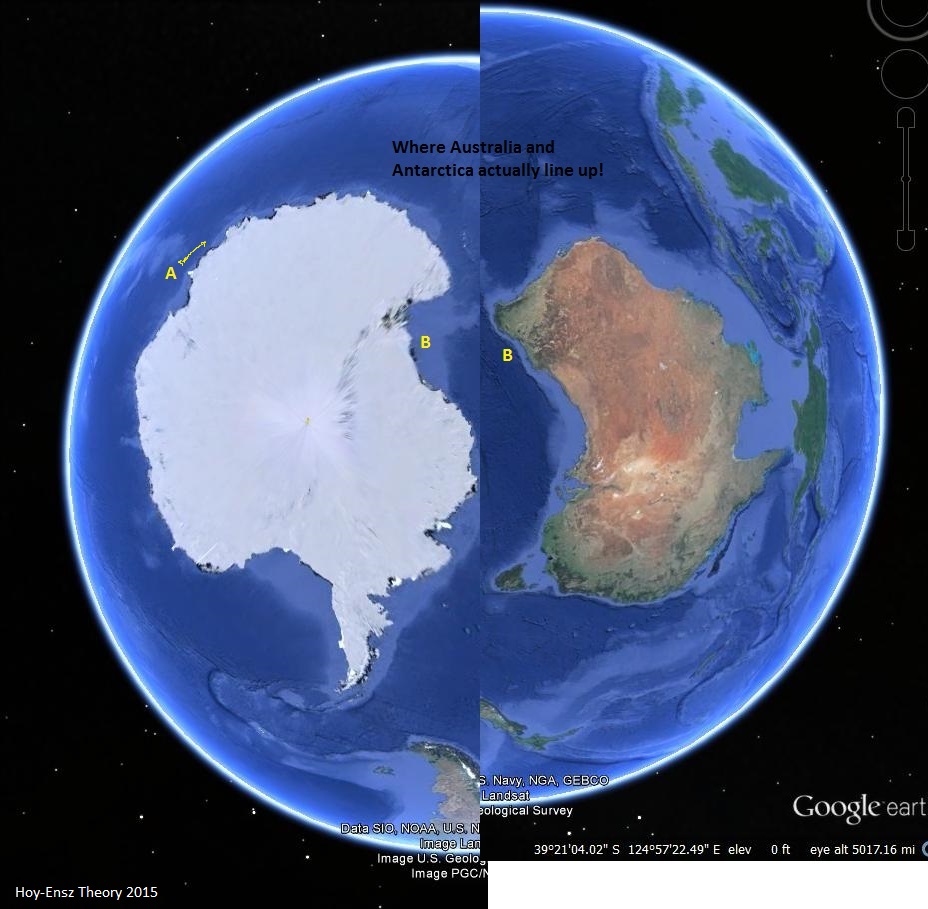
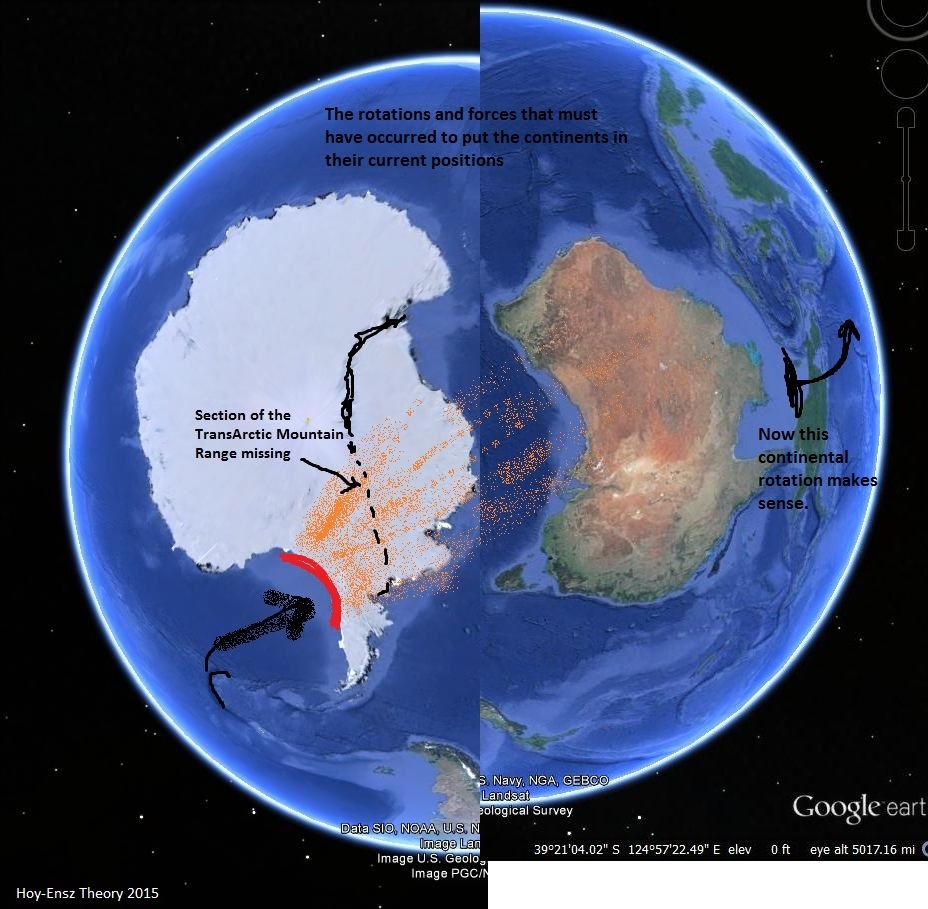
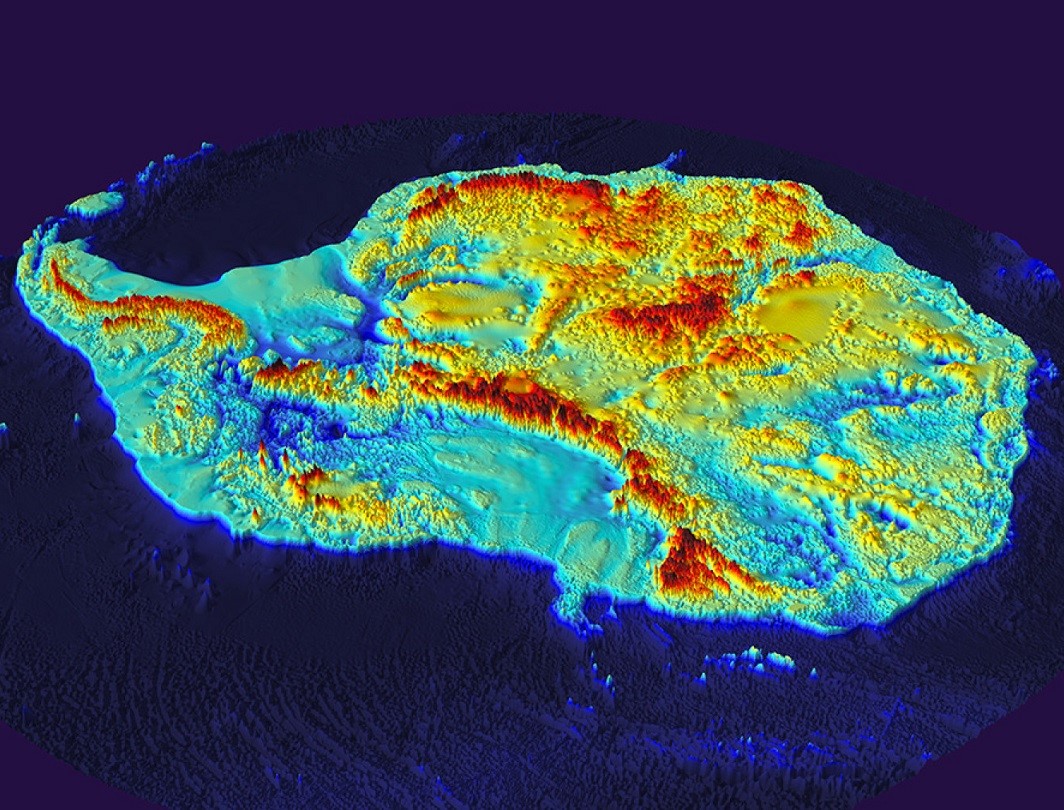
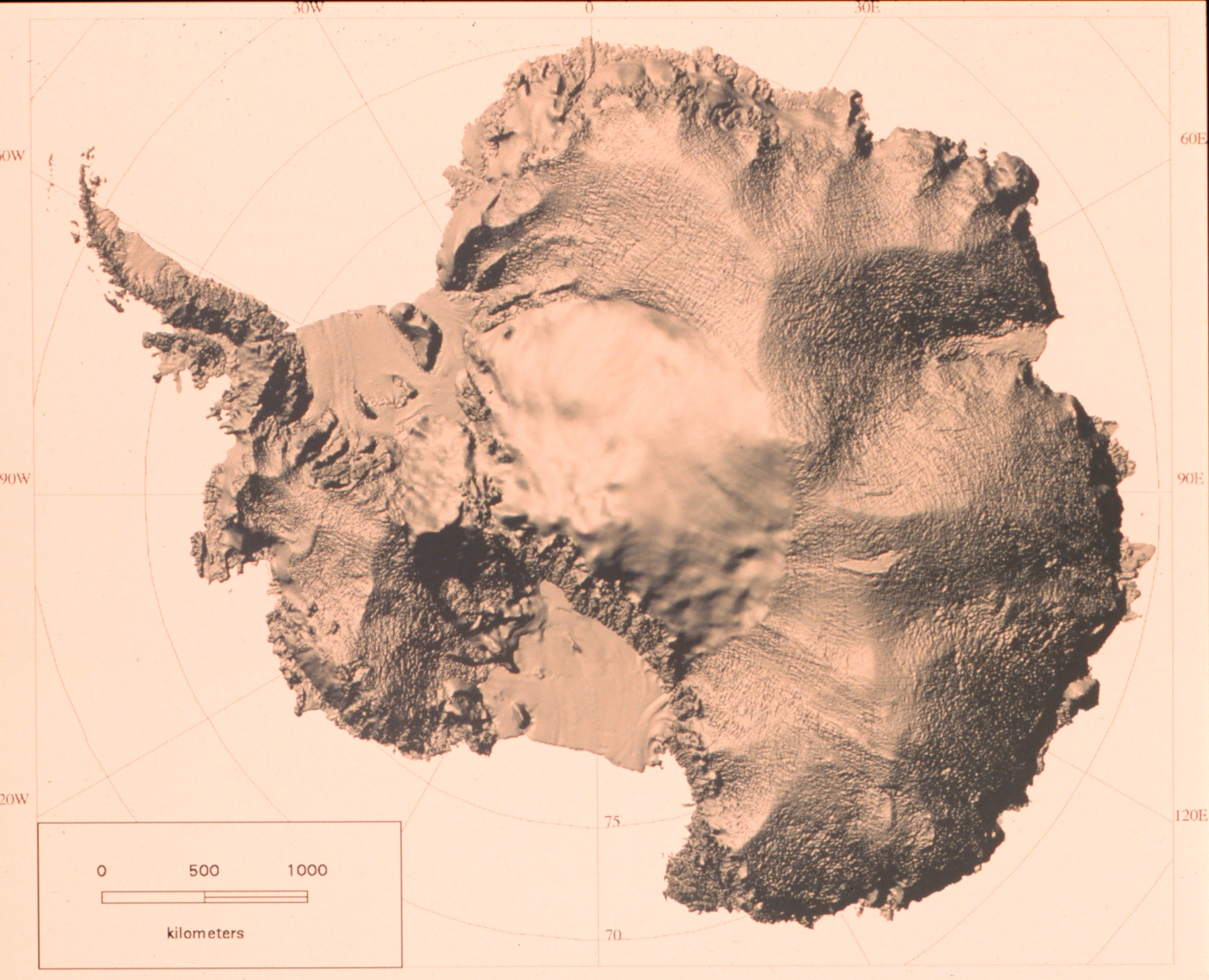
I fully realize that this Theory has issues of its own – particularly in light of the research shown in the attached article below. But, I feel I would be remiss if I did not point out that the Subduction Theories have just as much trouble explaining the paths of Antarctica (a clockwise spin to center itself on the South Pole – magma? centrifugal forces? Or more like a pool-ball in the center of the pack that “stays in place” after the balls that surrounded it go shooting towards the bumpers?), India (definitely headed for the “bumpers”, but North, not South!), and Australia (due East, almost as far away from where it began as India).
http://www.livescience.com/37991-gondwana-breakup-detailed.html
I remain curious because I see the Scotia Plate as clearly being an impact crater. I also see that at one time, 250 million years ago, that very same impact crater would have been situated exactly on the western border of what is now Antarctica. And, from the research I’ve read, the paths and “speed” of India and Australia are still very much in dispute – so much so, that I am willing to join the fray!
Sometimes life is a jigsaw puzzle.

